
 San
San Tangled hair can feel like a constant battle. Knotted strands are not only frustrating but can also be painful to detangle, often leaving your hair damaged if handled improperly. Certain hair types are naturally more prone to tangling, but this pesky issue can happen to anyone. Thankfully, with the right knowledge, tools, and techniques, detangling your hair can be easier and gentler.
In this article, we’ll dive into what causes tangled hair, how to prevent it, and the best ways to detangle without causing damage. Plus, we’ll highlight the Tangle Teezer, one of the most effective brushes for keeping your hair smooth and tangle-free.
Contents
- 1 What Causes Hair to Tangle?
- 2 How to Prevent Tangled Hair
- 3 How to Detangle Hair: Step-by-Step for Different Hair Types
- 4 Best Products and Tools for Tangled Hair
- 5 Tips for Dealing with Specific Tangling Issues
- 6 Dos and Don’ts of Detangling
- 7 How to Protect Your Hair While You Sleep
- 8 The Role of Hydration and Hair Health
- 9 Final Thoughts
What Causes Hair to Tangle?
Tangles occur when strands of hair wrap around each other, forming knots. This can be exacerbated by factors like dryness, damage, or environmental conditions. Here are the most common causes of tangled hair:
Hair Damage
Damaged hair cuticles are rough and open, which makes them more likely to catch onto other strands. Common causes of damage include heat styling, chemical treatments, and harsh hair products.
Dryness
Dry hair lacks the natural oils needed to keep strands smooth and separated. This can lead to increased friction between strands and, ultimately, tangles.
Environmental Factors
Wind, humidity, and pollution can cause your hair to knot. Wind whips strands together, while humidity causes swelling and interlocking of hair fibers.
Improper Hair Care
Rough towel drying, skipping regular brushing, and sleeping on cotton pillowcases are some habits that can lead to tangles.
How to Prevent Tangled Hair
The best way to manage tangled hair is to prevent it from happening in the first place. These simple tips can make a big difference:
- Keep Hair Hydrated: Use moisturizing shampoos, conditioners, and hair masks regularly to prevent dryness.
- Brush Gently and Often: Regular brushing helps to keep your strands smooth and free of knots.
- Use the Right Pillowcase: Switch to a satin or silk pillowcase to reduce friction and protect your hair while you sleep.
- Protect Your Hair: Wear your hair in braids or buns on windy days and use a scarf or hat for added protection.
How to Detangle Hair: Step-by-Step for Different Hair Types
For Straight or Wavy Hair
- Start with Dry Hair: Wetting straight hair before detangling can lock in knots. Use a wide-toothed comb or detangling brush.
- Work in Sections: Divide your hair into smaller sections for easier handling.
- Start at the Ends: Begin detangling from the tips and work your way up to the roots.
- Apply Detangling Spray or Oil: This helps reduce friction and makes the process smoother.
For Curly or Coily Hair
- Detangle When Damp: Curly hair is easier to detangle when it’s damp but not soaking wet.
- Use a Leave-In Conditioner: Coat your strands with a rich conditioner or detangling spray to add slip.
- Finger Detangle First: Start with your fingers to loosen larger knots before using a wide-toothed comb or brush.
- Work in Sections: Take it one section at a time, starting from the bottom and moving upward.
Best Products and Tools for Tangled Hair
The right tools and products are essential for effective detangling. Here are some must-haves:
- Wide-Toothed Comb: Gentle on all hair types and perfect for use in the shower with conditioner.
- Detangling Spray: Adds slip and reduces friction, making knots easier to manage.
- Hair Oil: Oils like argan or coconut oil nourish and soften strands, preventing future tangles.
The Best Brush for Tangled Hair: Tangle Teezer
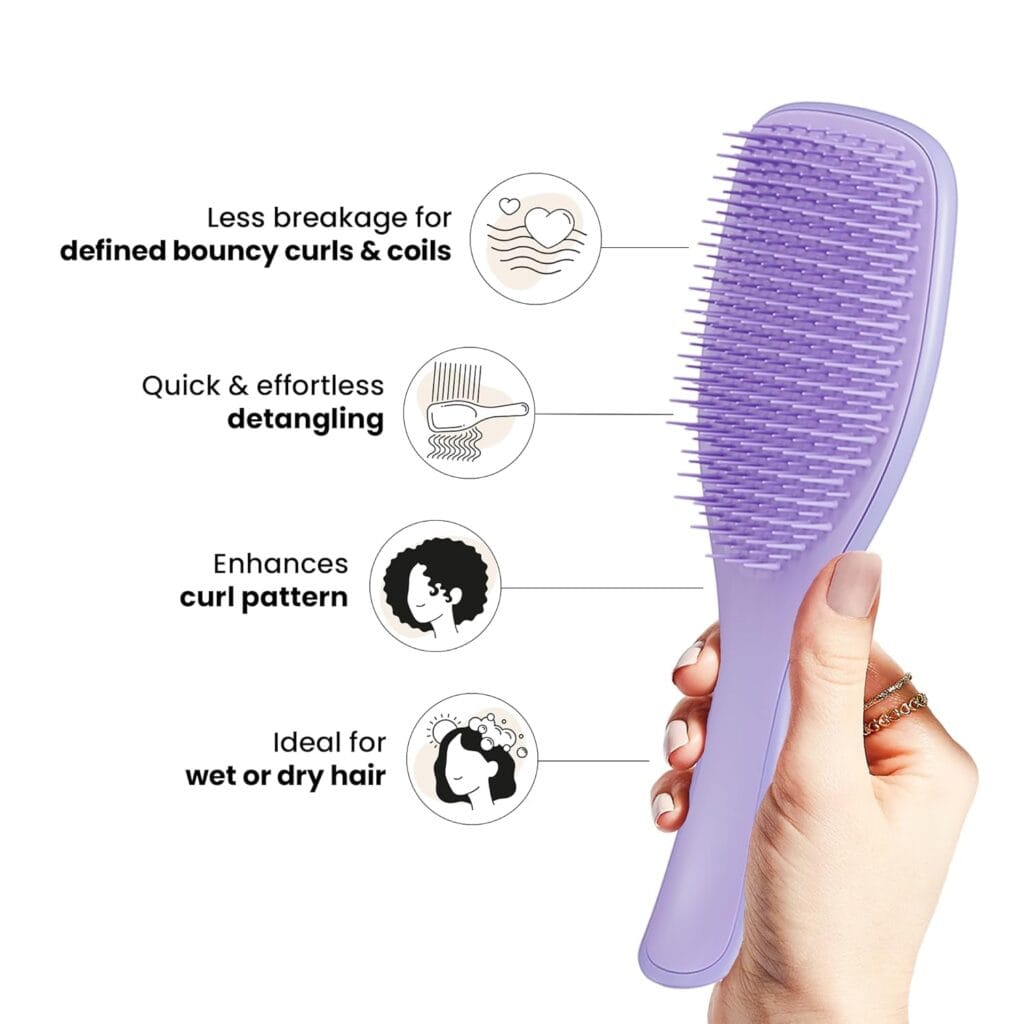
The Tangle Teezer is a game-changer for detangling. Designed with flexible bristles, this brush glides through knots without pulling or causing breakage. It works for all hair types and is especially effective for those with fine or damaged hair. Here’s why it’s a must-have:
- Flexible Bristles: The unique two-tiered bristles are designed to gently untangle knots without tugging.
- Ergonomic Design: Its compact shape fits comfortably in your hand, making it easy to use.
- Versatile Use: Whether your hair is wet, dry, straight, or curly, the Tangle Teezer works like a charm.
For best results, use the Tangle Teezer on damp hair with a detangling spray. Start at the ends and work your way up for a pain-free experience.
Tips for Dealing with Specific Tangling Issues
Single-Strand Knots
These tiny knots form when a single strand curls around itself. Use your fingers to gently separate the knot or snip it off with sharp scissors to prevent further tangling.
Knotted Ends
Apply a deep conditioning treatment to the ends of your hair before detangling. This softens the strands and makes it easier to work through the knots.
Tangles at the Nape of the Neck
This area is prone to knots due to constant friction. Use a detangling spray and your fingers to gently loosen the knots before brushing.
Dos and Don’ts of Detangling
Dos
- Do brush before washing: This removes loose strands and prevents knots during washing.
- Do use conditioner: A good conditioner adds moisture and slip, making detangling easier.
- Do detangle from the ends up: This method minimizes breakage and pain.
Don’ts
- Don’t brush wet hair: Unless you’re using a brush designed for wet hair, brushing can lead to breakage.
- Don’t force knots: Tugging at stubborn knots can cause damage. Be patient and use a detangling spray or oil.
- Don’t skip trims: Split ends make hair more prone to tangling. Regular trims keep your ends healthy.
How to Protect Your Hair While You Sleep
Nighttime care is crucial for preventing tangles. Follow these tips:
- Switch to Silk Pillowcases: These reduce friction and help your hair glide smoothly while you sleep.
- Braid Your Hair: Loose braids keep your hair in place and prevent knots.
- Use a Hair Wrap or Bonnet: These protect your hair from friction and keep it moisturized.
The Role of Hydration and Hair Health
Healthy, hydrated hair is less likely to tangle. Incorporate these habits into your routine:
- Drink Water: Proper hydration starts from within.
- Use Hair Masks: A weekly hydrating mask strengthens and softens your hair.
- Limit Heat Styling: Heat damages the cuticle, leading to dryness and tangles.
Final Thoughts
Tangled hair doesn’t have to be a drag. With the right tools, like the Tangle Teezer, and a consistent hair care routine, you can minimize knots and keep your hair looking sleek and healthy. Remember to be gentle, work in sections, and always prioritize hydration. Whether you have straight, wavy, curly, or coily hair, detangling can be a stress-free experience with the right approach.
As an Amazon Associate I earn from qualifying purchases.