
 San
San Social anxiety can be overwhelming, but with the right strategies, it’s possible to regain control and feel more confident in social situations. Cognitive Behavioral Therapy (CBT) is a proven approach to managing social anxiety, and here are three of the most effective exercises to help you overcome it.
Contents
Understanding Social Anxiety
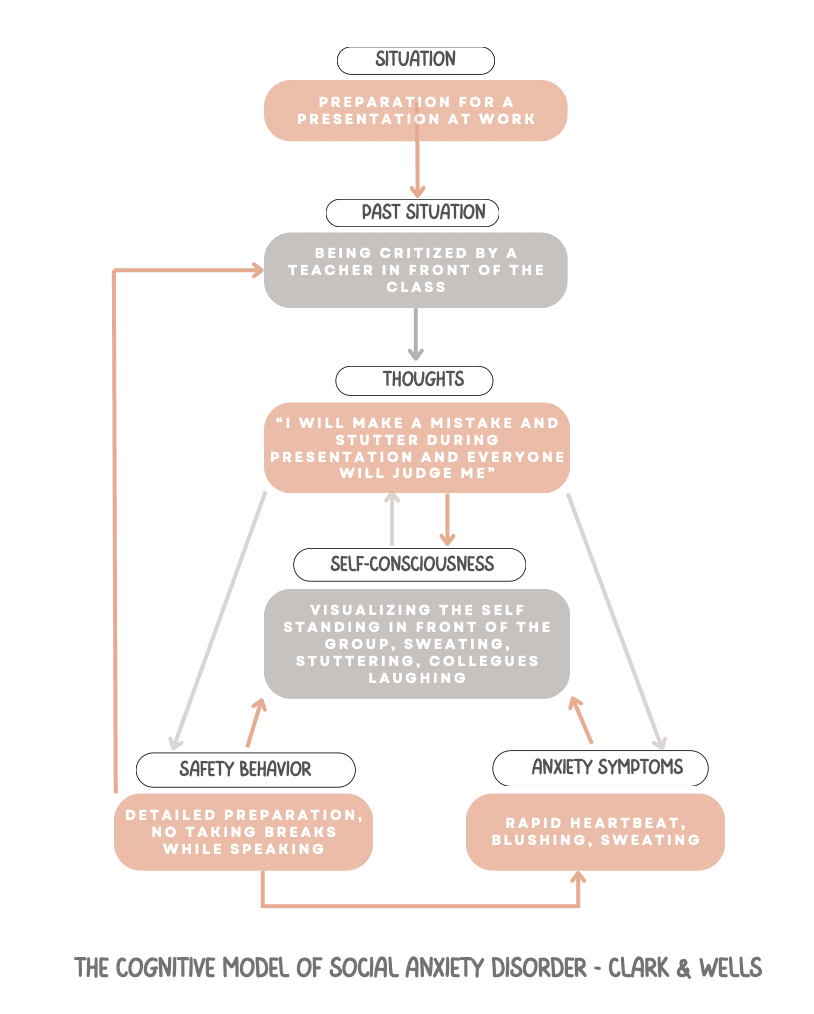
Before diving into the exercises, it’s important to understand what social anxiety is and how it affects you. Social anxiety is more than just feeling shy or nervous in certain situations. It’s a persistent fear of being judged, humiliated, or rejected in social settings. This fear can lead to avoidance behaviors, which, while temporarily relieving anxiety, often make the problem worse over time.
Common symptoms of social anxiety include:
- Intense fear of speaking in public or being the center of attention.
- Worrying excessively about embarrassing yourself.
- Avoiding social events or interactions.
- Physical symptoms like sweating, trembling, or a racing heart.
CBT focuses on breaking the cycle of anxiety by addressing the thoughts and behaviors that fuel it. The following exercises are designed to help you tackle social anxiety head-on.
Cognitive Restructuring
Purpose: Challenge and change negative thoughts that contribute to social anxiety.
Cognitive restructuring is a cornerstone of CBT. It helps you identify and reframe the automatic negative thoughts that arise in social situations. By replacing these thoughts with more balanced ones, you can reduce the intensity of your anxiety.
| Step | Action | Example |
|---|---|---|
| Identify | Pinpoint a social situation that makes you anxious. | Giving a presentation. |
| Record | Write down automatic negative thoughts. | “I’ll embarrass myself.” |
| Evaluate | Examine evidence for and against these thoughts. | “What’s the worst that could happen?” |
| Replace | Reframe with balanced, realistic thoughts. | “Even if I make a mistake, people will understand.” |
How to Practice Cognitive Restructuring
Start by keeping a thought journal. Whenever you feel anxious, jot down the situation and your thoughts. For each thought, ask yourself:
- Is this thought based on facts or assumptions?
- What evidence supports or contradicts it?
- How likely is it that my fear will come true?
- If the worst happens, can I cope with it?
Over time, this practice will help you develop a more realistic perspective, reducing your anxiety in social situations.
Exposure Hierarchy
Purpose: Gradually reduce anxiety by confronting feared social situations in a controlled way.
Avoidance is a natural response to anxiety, but it reinforces the fear. Exposure therapy, a key CBT technique, involves facing your fears gradually. An exposure hierarchy helps you do this in a manageable way.
| Step | Action | Example |
| List | Create a list of anxiety-provoking situations, ranking them from least to most stressful. | 1. Saying hello to a neighbor. 2. Joining a group conversation. 3. Speaking in a meeting. |
| Start Small | Begin with the least anxiety-provoking situation. | Say hello to a neighbor repeatedly until it feels comfortable. |
| Progress | Move up the list as your confidence grows. | Join a group conversation after mastering step 1. |
Building Your Exposure Hierarchy
- Write down 10-15 social situations that trigger your anxiety.
- Rank them from 1 (least anxiety-provoking) to 10 (most anxiety-provoking).
- Start with the easiest task and repeat it until your anxiety decreases.
- Gradually move up the list, tackling more challenging situations as you gain confidence.
Example
If speaking to a stranger in a coffee shop ranks low on your hierarchy, practice this several times. Notice how your anxiety decreases with repetition. Once you feel comfortable, move on to a more challenging task, like initiating a group conversation.
Behavioral Experiments
Purpose: Test assumptions about feared outcomes to learn that they are often exaggerated.
Behavioral experiments are designed to challenge your beliefs about social situations. By testing your assumptions, you can gather evidence that contradicts your fears.
| Step | Action | Example |
| Predict | Write down what you think will happen in a social situation. | “If I start a conversation, people will ignore me.” |
| Experiment | Plan and perform a test to challenge this belief. | Start a casual chat with a colleague. |
| Observe | Record what actually happens. | “They responded positively and kept talking.” |
| Reflect | Adjust your belief based on the results. | “My fears were unfounded.” |
Conducting Behavioral Experiments
Start by choosing a specific situation that causes anxiety. For example, if you fear being judged for asking a question in a meeting, write down your prediction (e.g., “Everyone will think I’m stupid”). Then, test this by asking a question. Afterward, reflect on the outcome. Was your prediction accurate? Likely, you’ll find that your fears were exaggerated.
Benefits of Behavioral Experiments
This exercise not only challenges negative beliefs but also provides you with positive experiences to draw on in the future. The more you practice, the more confident you’ll feel in similar situations.
Additional Tips for Managing Social Anxiety
While the exercises above are powerful tools, there are other strategies you can use alongside CBT to reduce your social anxiety:
Practice Mindfulness
Mindfulness helps you stay present and reduce overthinking. Techniques like deep breathing or body scans can ground you in the moment, making social interactions feel less intimidating.
Set Realistic Goals
Don’t expect to overcome social anxiety overnight. Set small, achievable goals and celebrate your progress, no matter how minor it seems.
Seek Support
Consider joining a support group or working with a therapist who specializes in CBT. Sharing your experiences with others can help you feel less alone.
Overcoming Common Challenges
It’s normal to encounter obstacles when working on social anxiety. Here’s how to address some common challenges:
Fear of Failure
Remember, progress isn’t always linear. If a situation doesn’t go as planned, view it as a learning opportunity rather than a setback.
Lack of Motivation
Remind yourself of the long-term benefits of overcoming social anxiety. Keeping a journal to track your progress can also boost motivation.
Self-Criticism
Be kind to yourself. Social anxiety is challenging, and it takes courage to confront your fears. Celebrate small victories along the way.
Take Control of Your Progress with a 3-Month CBT Planner
To make lasting changes in managing your social anxiety, consistent practice and structure are essential. That’s why I’ve created a 3-Month CBT Planner designed specifically for social anxiety for 4.30$. This planner includes:
✅ Core CBT Exercise: Practice one foundational exercise each week to build lasting habits, with 20 unique exercises over 3 months.
✅ 12 Unique Coloring Pages: Relax and unwind with therapeutic illustrations, one for each week.
✅ Progress Tracking: End-of-week tests to reflect on your anxiety levels and celebrate your growth.
This planner is your companion on the journey to reducing social anxiety, offering actionable exercises and insights tailored to your needs. Ready to take the next step? Check it out here and start transforming your social interactions today!

Final Thoughts
These 3 exercises to reduce your social anxiety are powerful tools to help you regain control and confidence in social settings. Consistent practice is key—take small steps, be patient with yourself, and celebrate your progress. Over time, you’ll notice significant improvements in your ability to navigate social interactions with ease.
By incorporating cognitive restructuring, exposure hierarchies, and behavioral experiments into your routine, you’ll develop the skills needed to manage social anxiety effectively. Remember, change takes time, but with persistence and the right strategies, you can achieve lasting results.